
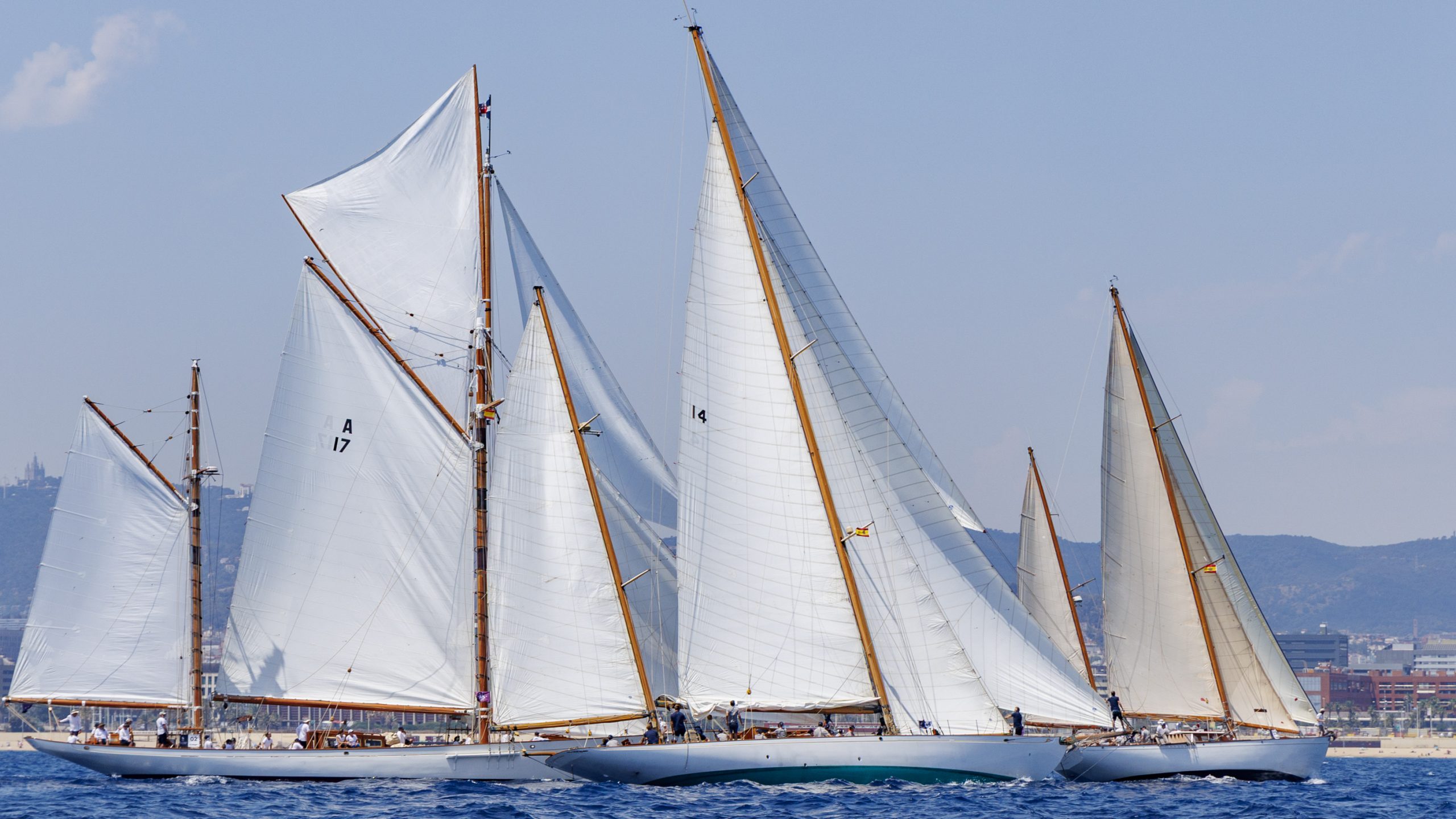
- The easterly wind allowed the fleet to show its full potential and provided duels decided by mere seconds, on a day that reaffirms Barcelona as the capital of classic sailing
- Légolas, Le Temps Perdu, Argyll, Islander, Odysseus, Eugenia V, Clarionet and Cariad, set the pace by leading their categories
Barcelona once again offered one of those days today that explain why the Puig Vela Clàssica is much more than just a regatta. The heat continued to set the pace along the coast, but this time the wind did turn up, allowing the fleet to display its full potential off the city.
Amidst manoeuvres, historic sails, and an atmosphere that blends competition and elegance, the classic vessels were able to take to the water and offer the spectacle that every July transforms the Barcelona coastline into a living museum of sailing. On this second day, the presence of the Levante (easterly wind) allowed the results board to be opened.
The intensity of the easterly wind increased from the initial 8-9 knots at the time of the first start for the classics, to peaks of 13 knots throughout the course. The swell, likewise, grew from the timid chop of barely half a metre to over a metre in height.
The regatta committee started punctually at 13:00 off Port Forum, choosing course four, of five legs (windward, reaching, reaching, reaching and downwind), which finished off the Port Olimpic after sailing 11.5 nautical miles.
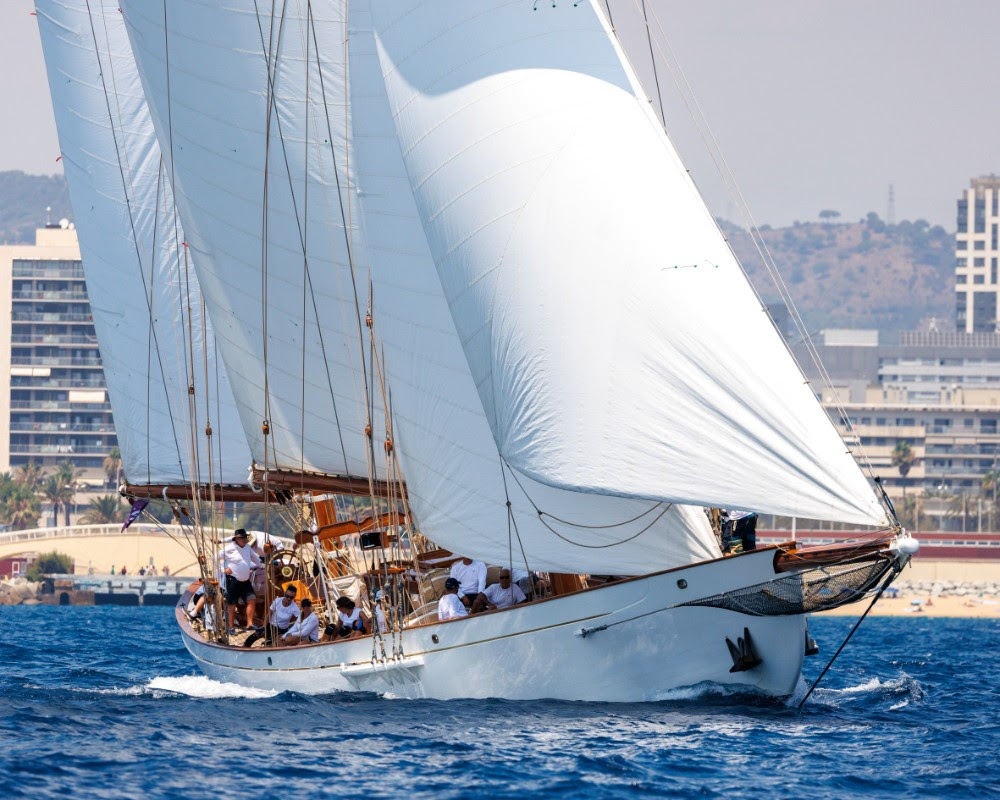
Cariad
Cariad takes the lead among the Big Boats
The speed of Chris Barkham’s British Big Boat Cambria was not enough to win the opening race of this Puig Vela Clàssica on corrected time, finishing fifth after time compensation. Victory went to Tim Hartnoll’s Cariad with a lead of almost seven minutes over Iñigo Strez’s Hallowe’en. Completing the podium was Mick Creach’s Gael I, with a tight margin of 1:14 minutes over fourth place: Hughes Boulenger’s Sumurun. Behind Cambria, Stefano Valiente’s Eilean finished sixth.
Classics
The French ketch (SN Saint-Tropez) Eugenia V, owned by Henry Cochin, took all the honours of the day, being the first boat in the fleet to complete the course and win in Classics 1 with a comfortable margin of 10 minutes on corrected time over the local Yanira, skippered by Jan Heuninck. Completing the podium for the day was Leonardo García’s Nerissa, ahead of Beg Hir and Bakea.
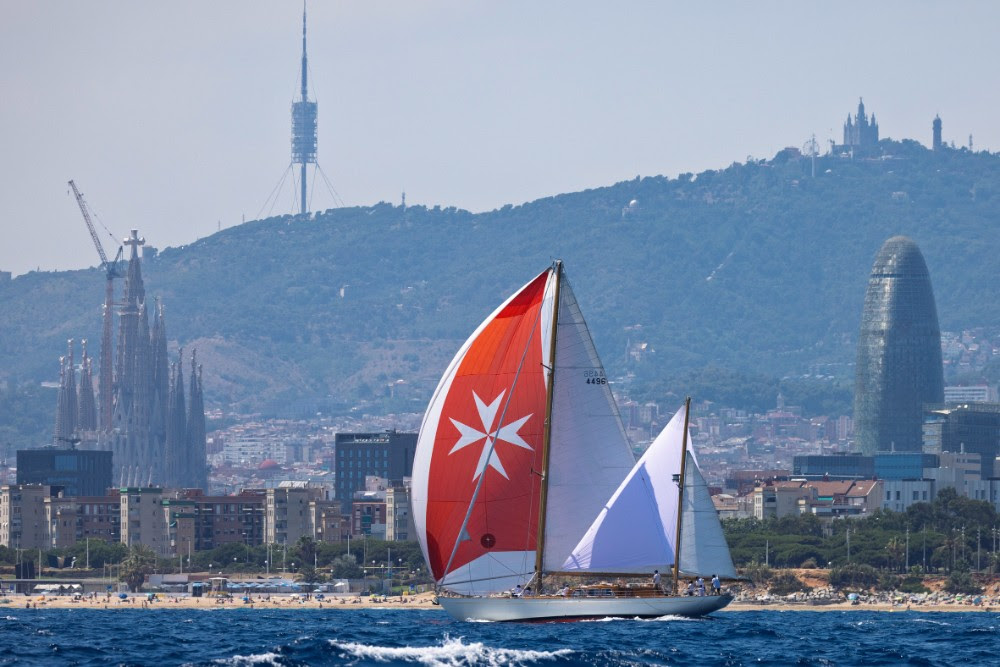
Eugenia V
The best of the Classics 2 was the British Clarionet, owned by Andrew Harvey, which also won convincingly by beating the second-placed Sea Fever, owned by Enrique Curt, by almost 14 minutes.
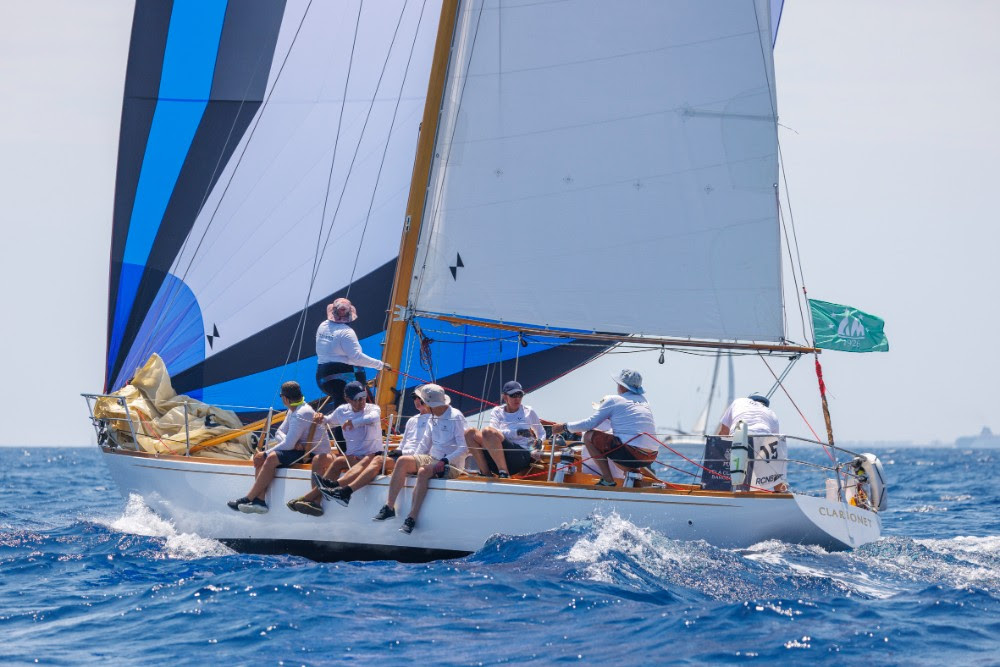
Clarionet
Jens Ricke’s Legolas dominated the Modern-Classic fleet in both elapsed and corrected time, leading the final classification ahead of the category’s youngest boat, Melmac, owned by Belén García Guillén, which in turn finished almost 11 minutes ahead of third-placed Victoria, owned by Peter Silvester, with Jordi Puig’s Phidias and Jordi Gallés’ Roxanne completing the table.
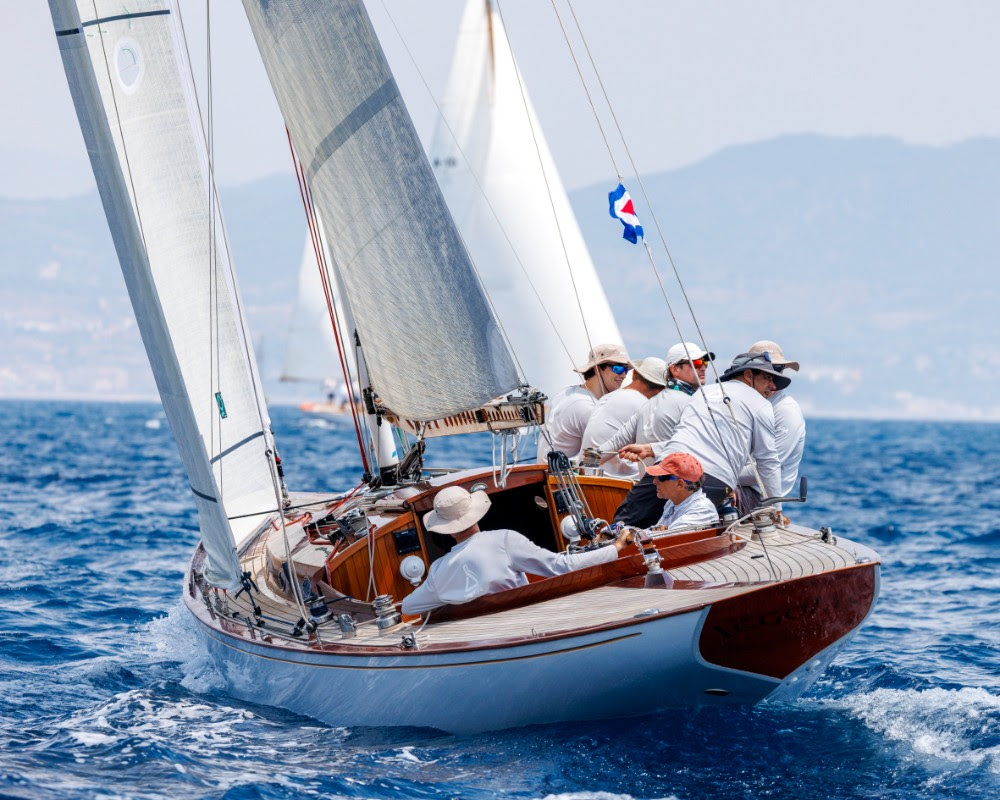
Legolas
In Classic IOR, the local Odysseus, owned by Juan Meseguer, demonstrated its potential against the French Algol V by 3:43 minutes after time compensation.
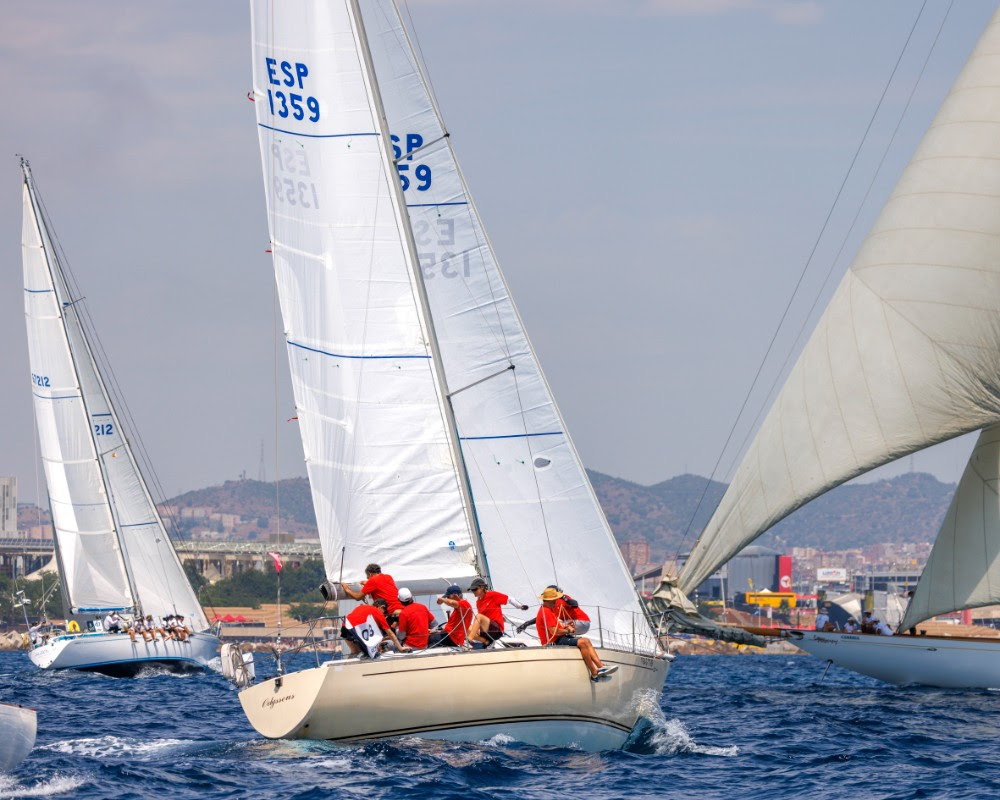
Odysseus
Vintage
A duel of titans in Vintage Bermudian 1 between Griff Rhys’ Argyll and Jens Kellinghusen’s Varuna II, classified in that order by just 12 seconds!! after taking more than two hours to complete the course. Five minutes behind both, the Argentine Recluta, owned by Germán Frers, took third place, ahead of the Portuguese Falcon, owned by Patrick de Barros, also by a narrow margin of 1:12 minutes.
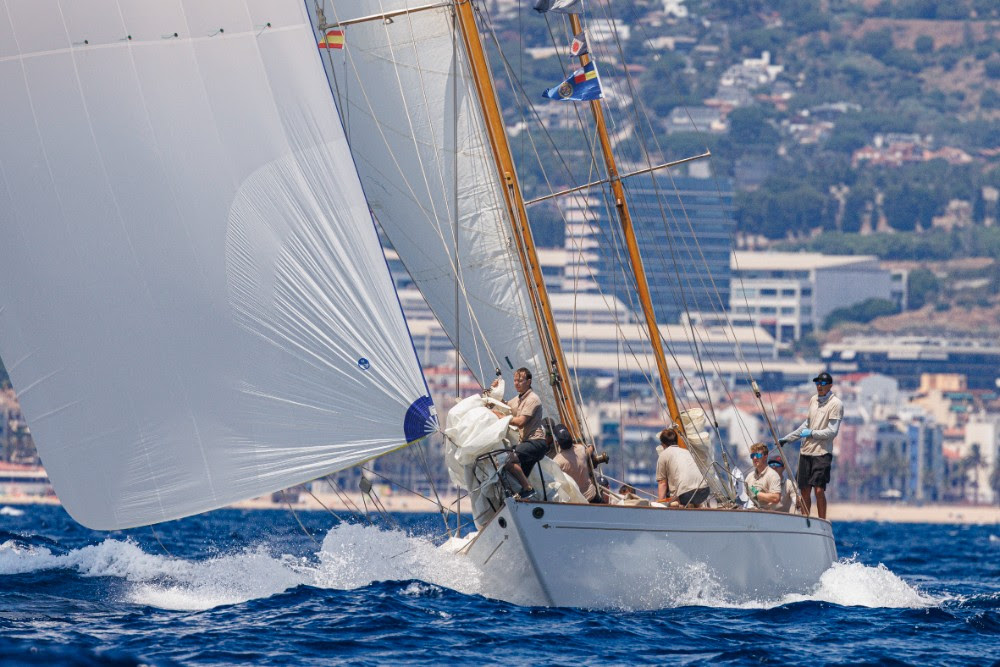
Argyll
The local Islander, owned by Ricardo Albiñana, won the day’s race in Vintage Bermudian 2, also by a whisker, as the French Andale, owned by Karl Criscolo, was 1:09 minutes slower on corrected time, with Manel López Wright’s Almaran New York in third place.
The characteristics of the gaff rigs and their short lengths complicated the regatta for the Vintage Gaff class, whose limited performance on the long initial windward leg prevented all but the local Le Temps Perdu, owned by Nelson Hausmann, from finishing the course.
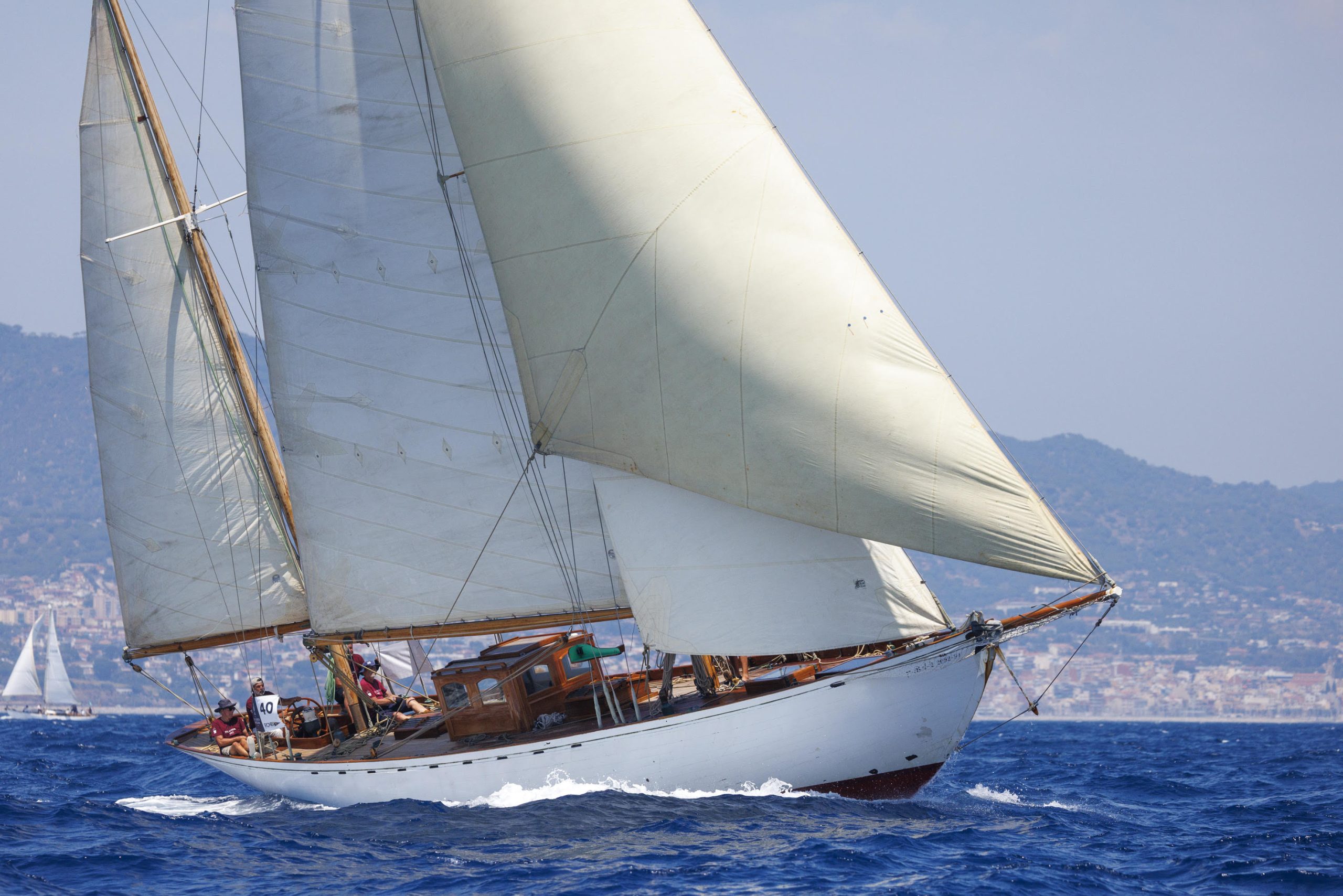
Islander
Tomorrow, the easterly wind is expected to blow again, and with a bit more intensity, it should provide another excellent day of competition in Barcelona’s waters.
The union of avant-garde technique and classic soul that revives a myth
Victoria is probably one of the most unique and innovative boats in the entire Puig Vela Clàssica fleet this year. Its history is intimately linked to one of the most iconic designs of American classic sailing, as it is the first unit of the Q7 Reimagined project, a contemporary reinterpretation of the legendary Q7 Falcon, one of the most famous Q-class boats designed under the Universal Rule, the same philosophy that gave rise to the legendary J-Class of the America’s Cup.
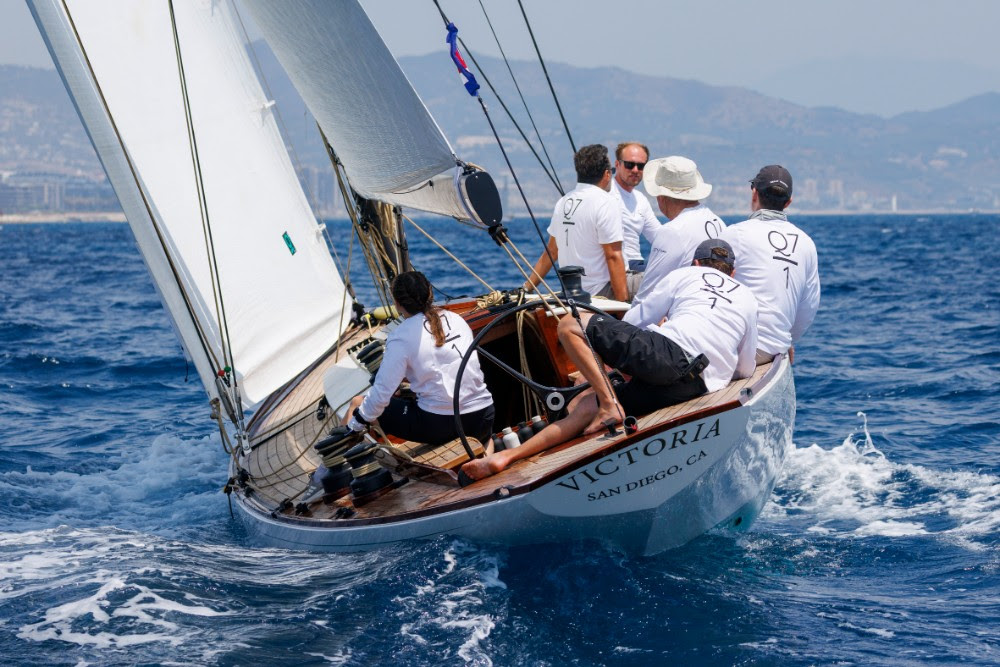
Victoria
The history behind the boat also has an important heritage component. The Falcon was one of the great representatives of the Q class, popularly known as the “mini J-Class” for sharing the same elegance, proportions and design philosophy as the great America’s Cup boats. Most notably, Victoria was launched in 2026, exactly one hundred years after the launch of the original 1926 Q7 Falcon, making it a piece with enormous symbolic weight. The project maintains the original hull lines, displacement and sail area of the Falcon, but incorporates contemporary materials and technologies, such as a carbon mast, modern navigation systems and solutions designed for sailing with small crews.
Its presence at the Puig Vela Clàssica is particularly relevant because it marks the arrival in the Mediterranean of a newly launched vessel destined to become a reference for the new generation of modern classics. Compared to century-old boats like Hallowe’en or Bon Temps, Victoria represents a different idea of maritime heritage: not the conservation of a historic vessel, but the recovery and updating of a legendary design to make it sail in the 21st century.
Share


